OnlyFans Parasocial Relationships: When the Fantasy Starts to Feel Real

Why do OnlyFans fans feel emotionally connected to creators? Explore parasocial relationships, loneliness, and the psychology behind digital intimacy.
The internet has changed the way people experience sexuality, attraction, and intimacy. Platforms like OnlyFans have created a new type of relationship between creators and fans — one that often feels more personal than traditional adult content.
For many users, subscribing to a creator is not just about watching explicit content. It can feel like interacting with a real person who talks back, responds to messages, and shares pieces of her life. That sense of closeness is exactly what makes OnlyFans different from the older model of online porn.
But it also creates something psychologists call a parasocial relationship.
These relationships are not necessarily harmful, but when the boundaries between fantasy and reality blur, they can become emotionally complicated. Understanding how these dynamics work is important both for fans and for creators.
What Is a Parasocial Relationship?
A parasocial relationship is a one-sided emotional attachment. One person feels connected to another, while the other person does not have the same level of personal awareness or emotional involvement.
This concept was first used in media studies decades ago to describe how audiences felt about television hosts or celebrities. People watching a show every day could begin to feel like they “knew” the person on screen.
Social media strengthened these dynamics. When creators share their daily life online, respond to comments, and interact with followers, they can start to feel like acquaintances rather than distant public figures.
OnlyFans pushes this dynamic further than most platforms.
Instead of simply following a public profile, subscribers often pay for private access to a creator. They can send messages, receive personalized replies, request custom content, or purchase experiences like private chats. This creates a level of perceived intimacy that traditional adult websites never had.
For some fans, that interaction can feel surprisingly real.
Why OnlyFans Feels More Personal Than Porn
Before platforms like OnlyFans, adult content was typically passive. A viewer watched a scene or a clip, but there was no expectation of interaction with the performer.
OnlyFans changed that model by blending adult entertainment with social media mechanics. Creators post regularly, share updates, talk directly to subscribers, and sometimes present their page as a more personal space.
The result is an environment where fans may begin to feel that they have an actual relationship with the creator.
The more communication there is — messages, voice notes, personalized content — the stronger that feeling can become. Even when both sides understand that the interaction is transactional, the emotional experience may still feel genuine to the fan.
This is where parasocial attachment begins to form.
Loneliness and the Appeal of Digital Intimacy
Parasocial relationships are not unique to OnlyFans, but they tend to grow stronger when people feel isolated.
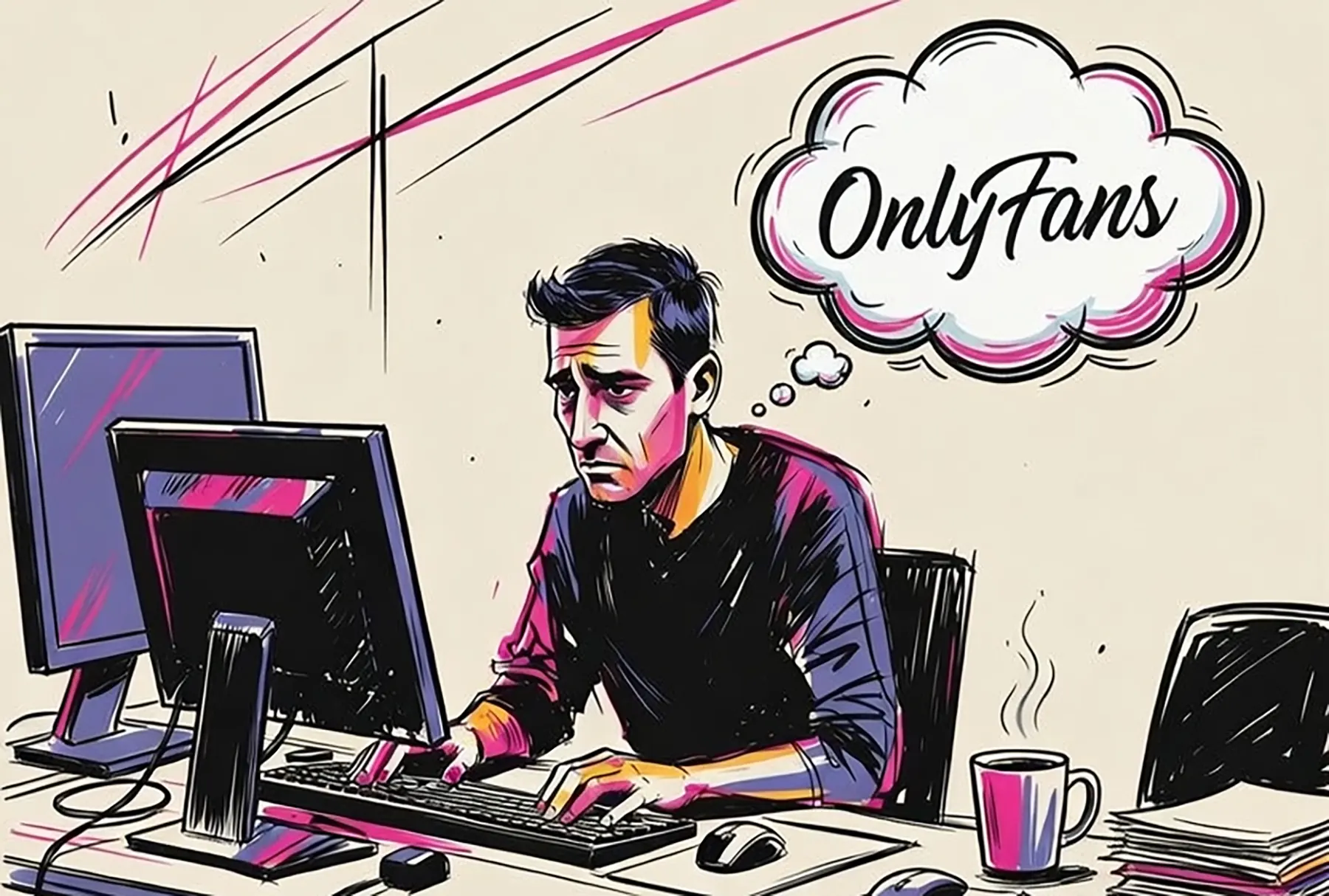
Modern dating can be difficult, especially for men who struggle with rejection, social anxiety, or lack of romantic experience. For someone who feels invisible in everyday life, paying for attention online can be surprisingly comforting.
On OnlyFans, attention is predictable. Messages get responses. Compliments are returned. Communication feels warm and personal.
For someone who rarely experiences that kind of interaction in the offline world, the platform can create a powerful emotional loop. The fan begins to associate the creator with validation and companionship.
At that point, the subscription may no longer be about the content itself. It becomes about the feeling of connection.
Interestingly, this emotional dynamic is part of the broader topic of digital intimacy and transactional attention online. Many of the psychological factors behind it are explored in more detail in our article on the psychology of paying for sex online, which explains why emotional engagement can be just as important as sexual content for many users.
When Fantasy Becomes Confusing
There is nothing inherently wrong with enjoying fantasy. In fact, fantasy is one of the foundations of adult entertainment.
Problems start when the line between fantasy and reality becomes blurred.
Some subscribers begin to believe that their relationship with a creator is unique or special. They may interpret friendly messages as romantic interest or assume that the creator genuinely cares about them personally.
This misunderstanding can create emotional vulnerability.
A fan might spend more money to maintain the connection, hoping to receive more attention or deeper interaction. In extreme cases, he may even believe that a real relationship could eventually happen.
When those expectations clash with reality, disappointment and resentment can follow.
The Business Model Behind Personal Attention
It is important to understand that OnlyFans is ultimately a business platform.
Creators earn money by selling subscriptions, content, and interactions. The more engaged a subscriber feels, the more likely he is to remain subscribed and purchase additional content.
That means emotional engagement is often part of the strategy.
Some creators build strong communities around their pages by sharing personal stories, talking with subscribers, and creating a welcoming atmosphere. For many fans, this interaction is part of the entertainment they enjoy.
However, not all interactions are handled ethically.
Some creators — and especially agencies that manage creator accounts — intentionally encourage fans to believe that their connection is romantic or exclusive. Messages may be designed to create the illusion that the subscriber is uniquely important or personally desired.
In those situations, the parasocial relationship is no longer accidental. It becomes a deliberate marketing tool.
Signs a Parasocial Relationship Is Becoming Unhealthy
Parasocial relationships can remain harmless if they are kept in perspective. The key issue is whether the fan understands the boundaries of the interaction.
There are a few common warning signs that the relationship may be becoming unhealthy:
- Believing the creator has genuine romantic feelings
- Feeling jealous of other subscribers or collaborators
- Spending more money than intended to maintain attention
- Feeling emotionally dependent on the creator’s messages
- Thinking frequently about the creator during everyday life
- Avoiding real dating opportunities because of the online relationship
When these patterns appear, the fan may be investing emotionally in something that was never meant to be reciprocal.
Recognizing that dynamic early can help prevent deeper emotional attachment.
A Podcast Conversation on the Risks
The topic of parasocial relationships on OnlyFans has been discussed by several experts and industry professionals.
In a podcast conversation between Dr. Rena Malik and adult industry producer Holly Randall, this issue came up directly. Dr. Malik raised the concern that as people become lonelier, they may begin forming attachments with online performers instead of building relationships in real life.
Randall acknowledged that this can happen and explained that she tries to set clear boundaries with subscribers. If a fan starts believing he might have a real romantic future with her, she makes it clear that the platform is a fantasy space, not a substitute for real relationships.
She also pointed out that some creators — and particularly agencies managing accounts — intentionally exploit those emotional expectations. In those cases, the subscriber is treated primarily as a source of revenue rather than as a person.
The conversation highlights how complicated parasocial dynamics can be in a monetized environment like OnlyFans.
Why Fantasy Still Matters
Despite the potential risks, it is important to recognize that fantasy itself is not a problem.
Entertainment has always involved imagination and emotional projection. Movies, books, games, and celebrity culture all rely on the audience temporarily suspending disbelief and entering a fictional world.
Adult entertainment works the same way.
The key difference is whether the consumer understands that the experience is still fiction — even when it feels personal.
When someone enjoys OnlyFans as a form of entertainment while maintaining clear boundaries between fantasy and real life, parasocial dynamics usually remain harmless.
Problems arise when the emotional investment becomes deeper than the structure of the platform allows.
Maintaining Healthy Perspective
For fans who enjoy OnlyFans, maintaining perspective is essential.
A few simple principles can help:
Treat subscriptions as entertainment rather than relationships.
Set a clear spending limit before interacting on the platform.
Remember that creators communicate with many subscribers.
Avoid interpreting friendly messages as romantic signals.
Focus on building relationships and social connections offline as well.
By keeping these boundaries in mind, fans can enjoy the content and interaction without becoming emotionally dependent on it.
The Future of Parasocial Relationships Online
Parasocial relationships are not going away. In fact, they are likely to become even more common.
Platforms continue to evolve toward more personal interaction between creators and audiences. Livestreaming, subscription communities, and private messaging systems all increase the sense of intimacy between public figures and their followers.
OnlyFans is simply one example of this broader trend.
As technology develops — and as artificial intelligence and virtual companions become more sophisticated — the line between digital fantasy and emotional reality may become even harder to distinguish.
Understanding parasocial relationships now may help people navigate these new forms of digital intimacy in healthier ways.
Conclusion
OnlyFans did not invent parasocial relationships, but it created a system where they can flourish.
By combining adult content with personal interaction, the platform allows fans to feel closer to creators than ever before. That closeness can be entertaining and enjoyable, but it can also lead to emotional confusion if the boundaries between fantasy and reality are not understood.
At its best, OnlyFans is simply another form of adult entertainment — one where fantasy and interaction coexist.
The challenge is remembering that, no matter how personal it may feel, the relationship still exists inside a platform built around performance, content, and business.